Public Survey on Making Colehill Parish Council a Town Council
Summary
- During November we sought views from our residents on whether or not Colehill Parish Council should become a Town Council.
- This page shows the information we provided to residents when asking for feedback.
- The survey closed on 26th November, the results are shown below.
The New Green Belt Rules
- Historically, Green Belt sites such as the fields around Colehill could only be developed in exceptional circumstances.
- However the Government have recently amended the planning rules, and in many cases Green Belt sites can now be re-classified as Grey Belt and developed if required for the local authority to meet its housing targets.
- There are now only a small number of exceptions that protect Green Belt land from development. One of these exceptions is if the site forms a substantial part of a gap between towns, and development would result in the loss of visual separation between the two towns.
- Government guidance explicitly states that this protection only applies to the merging of towns, not villages.
The Potential Green Belt Protection if Colehill becomes a Town Council
- The Draft Local Plan issued for consultation by Dorset Council in Sept 2025 identifies 13 potential housing development sites in Colehill, totalling 2,461 potential new homes.
- If Colehill Parish Council becomes a town council then, based on the Government’s new Green Belt guidance, 6 of these sites with 909 potential homes could be protected from development, as they form a substantial part of the small green corridors that exist between Colehill & Wimborne Minster and Colehill & Ferndown.
- A further 3 sites within Wimborne Minster parish with 201 houses might also be protected, as they also form part of the corridor that separates the two settlements.
- In total, by becoming a town council, we could be able to protect 9 sites from development and potentially reduce the number of new homes in the area by 1,110.
- Protection is not guaranteed, as the new Green Belt Guidance was only issued in Feb 2025 and may still be subject to change.
The Process and Implications of Becoming a Town Council
- The process is very simple. The Local Government Act 1972 sect 245 allows any parish council to simply vote to become a town council. Approval is not required from either Dorset Council or the Government.
- Colehill’s population is c. 7,500, which is the population the House of Commons use to classify a settlement as a small town. This is not a fixed definition, there are currently 7 towns in Dorset with smaller populations including West Moors, Wareham & Sturminster Newton. If all the proposed housing development in the Local Plan goes ahead then our population would increase to c. 13,400 and we would be the 9th largest settlement in the county, bigger than towns like Wimborne Minster, Corfe Mullen & Blandford Forum.
- There are no specific facilities required to be a town, such as a town centre. We do have many of the facilities typically found in small towns, including: Schools, Library, Churches, Community halls, Youth Club, Scouts/Guides, Cricket Ground, Playground, Recreation Park, Post Offices, Pub, Pharmacy, Care homes, Cemetery, Petrol Station, Garages, Bus Services, Light Industrial areas.
- If Colehill Parish Council vote to become a town council, then:
- The Council immediately becomes known as Colehill Town Council.
- We could decide to use the terms of Town Mayor and Deputy Town Mayor for our Council Chair and vice-Chair, but this name change is optional. It doesn’t change the role and has no cost implications.
- Our parish councillors would continue to work on an unpaid basis.
- The Annual Parish Meeting will be known as the Annual Town Meeting.
- The only costs anticipated would be minimal, e.g. to change our logo, banners and other signage over time, and to update our official name with the bank, HMRC etc.
- There are no ongoing cost implications anticipated.
- Converting to a town doesn’t automatically mean more services, staff or money, but it would increase our status and recognition, helping to differentiate us from the neighbouring towns of Wimborne Minster and Ferndown.
- Any other organisations that use the term Colehill Village, for example Colehill Village Hall, would be unaffected, they can continue to use their current name.
- Note, West Moors and Corfe Mullen both recently converted to Town Council so we’re engaging with them, plus talking with some other parishes that that are currently considering converting to towns, to identify any useful lessons from their experience.
Survey Results
- 1,394 people viewed our Facebook post, our most viewed post in November.
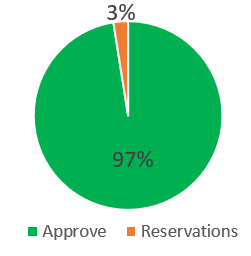
- 79 people clicked through to the survey page on our website and 40 people went on to submit feedback, with 97.5% of those in favour.
- The reasons given were:
- Seeking to protect the Green Belt
- Raising the profile/status of our parish
- Potentially attracting more facilities in to the parish
- Just one person expressed reservations, with concerns that it might lead to us taking on more services and increasing our council tax precept. This concern about the precept being increased was also mentioned by three people in favour of converting to a Town Council.